Why 15–20% of e-commerce sales show up as “Direct” traffic?

In e-commerce, attribution loses 15–20% of orders – according to Sublime Analytics data. These are transactions that were completed and paid for, but where the analytics system cannot determine where the customer came from. Such orders default to the “Direct” channel – as if the customer landed on the site directly and bought without any contact with advertising.

In reality, a large share of these orders comes from paid channels. Their trail breaks at the final stage of the purchase – at the payment gateway. As a result, the budget is optimized on data that assigns sales to the wrong channel.

Why the path breaks right at checkout

A purchase journey in e-commerce rarely consists of a single click. The customer encounters the brand on social media, returns through search, switches devices, decides after a few days. Attribution handles these scattered paths well.

The problem appears at the last step. After clicking “Pay”, the customer moves to an external payment gateway – Stripe, PayU, Przelewy24, BLIK – and completes the purchase there. Often they never return to the thank-you page.

For the analytics system, that return is the signal that closes the transaction. Without it, the system cannot assign the order to a source, so it records it as “Direct”. The sale counts, but the channel that brought it in disappears from the data.

What Sublime does about it

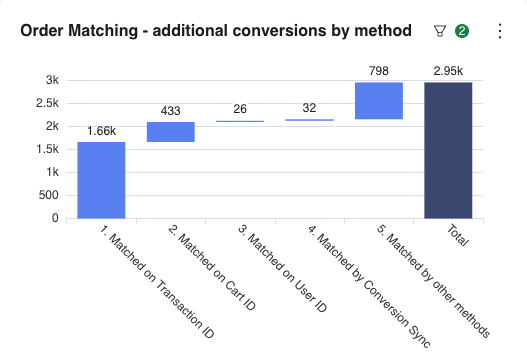
Sublime links the order to its source already at the cart stage, before the customer moves to the payment gateway. The return to the thank-you page is no longer needed to close the path.

This is handled by the cart_id identifier. The moment a customer starts a purchase, Sublime attaches a unique number to the cart. If the store engine (Shopify, PrestaShop, Shoper) does not generate that variable on its own, Sublime creates it and appends it to the order as a parameter.

As a result, every completed order can be linked to the source that brought the customer in – even when they passed through the payment gateway and never came back to the site. The path stays complete, because it no longer depends on the return to the thank-you page.
Data from the implementation

Below is data from a client whose main acquisition channel is Google Ads. The cart_id implementation took place at the turn of December 2025 and January 2026.

MetricBeforeAfterChange
Revenue share – Direct19.3%14.0%↓ 5.3%
Orders share – Direct15.5%11.0%↓ 4.5%

Direct shrank by more than 5%. Customers did not start behaving differently – the completeness of the data changed.

MetricBeforeAfterChange
Revenue share – Google Non-Brand35.4%44.6%↑ 9.2%
Orders share – Google Non-Brand39.6%47.0%↑ 7.4%

Google Ads previously accounted for 35% of revenue. After implementation – nearly 45%. The channel took over transactions that had been unassigned or booked as “Direct”. These are the same orders and the same budget. The only thing that changed is that it is now clear which channel brought them in.

How this affects your business

Better attribution means different budget decisions, because:

  • conversions go to the right campaign instead of to “Direct”,
  • budget goes to the channels that actually sell, not the ones that only look that way,
  • campaign goals can be set on real numbers,
  • optimization algorithms get a fuller signal, so they work better.
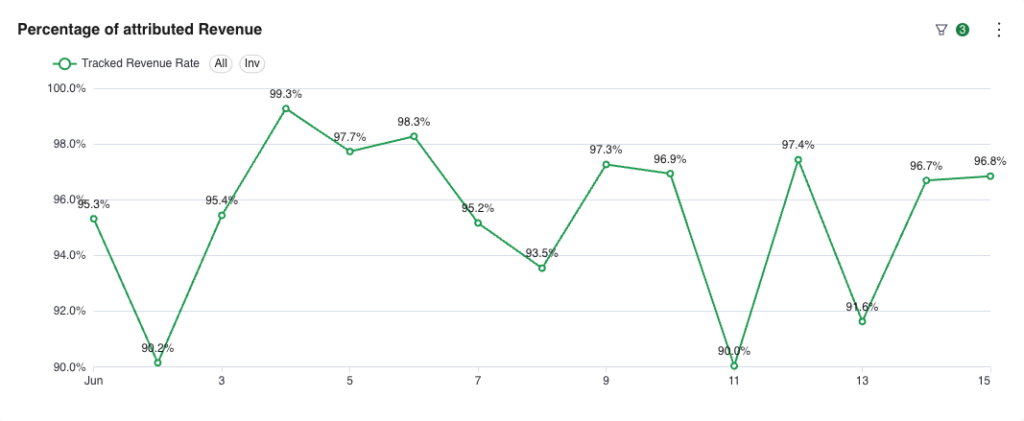
It is worth being clear about what Sublime does not do: it does not generate new sales. It recovers the sales that were already made but were not visible in the data. The effect is a fuller picture of which channel actually drives sales.

Want to see how much of your revenue goes to “Direct” instead of the channel that really generated it?
Book a demo!

Read our latest articles

Why 15–20% of e-commerce sales show up as “Direct” traffic?
FEATURES
Read more
Sublime-Attomy
How to Grow on Data: Analytics in Shopify
GUIDE
Read more
Boosting Campaigns with CAPI
Every Transaction Counts: Boosting Campaigns with CAPI
FEATURES
Read more
The Ultimate KPI Dashboard for DTC Growth Leaders
FEATURES
Read more

BUSINESS AREAS

SUBLIME IS A PERFECT MATCH FOR

Marketing teams

Sublime connects every campaign to real business outcomes, from first click to long-term retention and LTV. With first-party attribution and margin-based performance tracking, it becomes clear which channels truly drive profitable growth.

  • True impact of Meta, TikTok & influencers
  • Optimize ad spend based on margin
  • Retention & LTV by acquisition source
  • New vs returning users per campaign
  • Best-selling products to marketing channels

E-commerce teams

Sublime helps e-commerce teams understand how customers shop, why they come back and which products truly build long-term value. All in one structured, user-level customer journey, without stitching reports from GA4, Shopify or incomplete reports spread across platforms.

  • Retention by cohort or customer segment
  • Behaviors driving churn and repeat purchases
  • Discount impact from revenue to Margin II
  • High-value product pairs & cross-sell opportunities
  • Activate segments in Meta, Klaviyo, TikTok

Data analysts

Sublime gives analysts a trusted foundation to work with: raw user-level data, unified into one consistent model. With a consistent model and full SQL access, data teams can build dashboards from custom metrics and segments to advanced attribution and retention models.

You can:

  • Build custom dashboards on unified data
  • Explore raw events with SQL
  • Integrate Sublime with your existing BI tools
  • Define new metrics and custom segments
  • Full customer journeys across channels

BUSINESS AREAS

SUBLIME IS A PERFECT MATCH FOR

FEATURES

DATA-DRIVEN CAPABILITIES

True value of Meta and TikTok campaigns.

Sublime Analytics Platform connects customer journeys across devices and channels to show which campaigns truly drive valuable users.

Unlike GA4 (Google Analytics 4) or marketing platform reports, it captures the full path to conversion and beyond.

Optimize marketing spend based on profit

Revenue doesn’t always reflect true business performance – what really matters is profit.

Sublime lets you evaluate campaign effectiveness based on contribution margin and optimize for POAS (Profit on Ad Spend), instead of just ROAS (Return on Ad Spend).

Influencer campaigns tracked and measured like channels

Traffic and conversions from influencer links and coupon codes are attributed directly in the model.

This puts creators on the same playing field as paid, organic, or affiliate channels.

LTV broken down by acquisition channels.

You can see how lifetime value evolves over time by channel – Meta, Google, email, influencer, and more. Focus the budget on sources that bring in loyal, profitable customers.

True value of Meta and TikTok campaigns.

Sublime Analytics Platform connects customer journeys across devices and channels to show which campaigns truly drive valuable users.

Unlike GA4 (Google Analytics 4) or marketing platform reports, it captures the full path to conversion and beyond.

Revenue doesn’t always reflect true business performance – what really matters is profit.

Sublime lets you evaluate campaign effectiveness based on contribution margin and optimize for POAS (Profit on Ad Spend), instead of just ROAS (Return on Ad Spend).

Traffic and conversions from influencer links and coupon codes are attributed directly in the model.

This puts creators on the same playing field as paid, organic, or affiliate channels.

You can see how lifetime value evolves over time by channel – Meta, Google, email, influencer, and more. Focus the budget on sources that bring in loyal, profitable customers.

Unlock your business potential with Sublime