If you want to scale a business, sooner or later you’ll run into two acronyms that sound like a secret code for insiders: LTV and CAC. And that’s a good thing. Because if there’s one metric that truly shows whether a business is „doing well”, it’s the ratio of LTV to CAC.
And here’s the thing: the easiest way to understand it is through… Tinder.
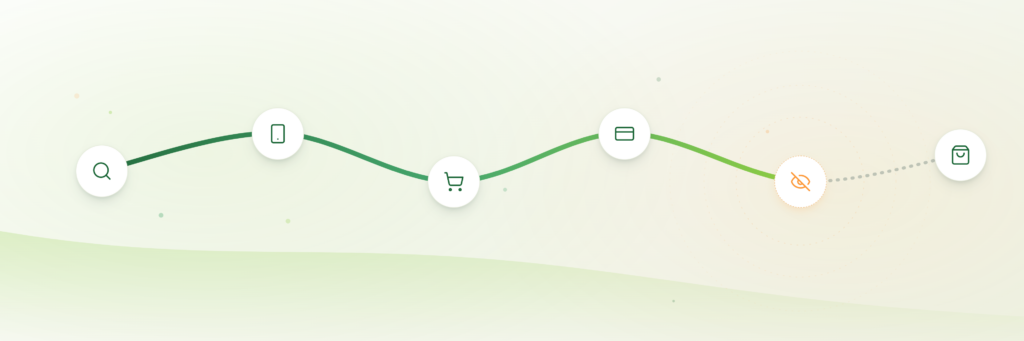
Imagine you’re setting up a business/profile on Tinder:
- The product – that’s you.
- The website – that’s your profile.
- Marketing campaigns – that’s the messaging, the opening lines, reacting to stories.
- The first purchase – that’s the first date.
- A discount coupon – that’s flowers.
- Remarketing – that’s the „hey, how was your day?” after the first meetup.
- A subscription – that’s a weekend together in Tuscany. Sounds strange? Read to the end and it’ll make sense.
And now the question: are you the kind of person people go on one date with, or the kind they want to keep seeing?
Because that’s exactly what LTV:CAC is about.
CAC – how much does the first date cost?
CAC (Customer Acquisition Cost) is the cost of acquiring a customer for their first order. In the dating world it’s the time spent messaging, Tinder premium, dinner, flowers and an Uber both ways. In business it’s ads, commissions, content, remarketing and influencer collaborations.
You can spend a lot to get to that first date. The question is: will there be a second one without another bouquet, and will you be the one who has to text first?
LTV – do they want to keep seeing you for years?
LTV (Lifetime Value) is the value a customer generates over the entire relationship with your company. In the dating world it’s the second date, the third, holidays together, maybe even a mortgage. In business it’s repeat purchases, cross-sell (selling a complementary product to something the customer already bought), subscription and referrals to friends.
If the product (read: you) is genuinely good, there’s no need to talk anyone into a second date – it happens naturally. If it’s mediocre, the workarounds begin: a -10% coupon, free shipping, „a special offer just for you”. Will a second date without a coupon even happen? That’s precisely the question about product quality and the strength of your LTV.
Why is LTV:CAC the most important metric?
CAC on its own means nothing. You can have a low acquisition cost and customers who vanish after one purchase – in dating that’s a quick „hey”, a coffee, and getting ghosted the next day. Or a high acquisition cost and customers who stay for years – in dating that’s a long conversation, dinner, time and commitment that end in holidays together and meeting the parents. What matters is the relationship.
If CAC = 300 and LTV = 1000, you have a healthy model. You can scale, raise budgets, grow faster. If CAC = 100 and LTV = 120, you’re financing someone else’s dates, not your business.
But the point isn’t to always have the lowest CAC, nor to burn budget in the name of „scaling”. The point is fit, because different customers have different LTV potential. Marketing will deliver the first date. Never the whole relationship.
And that’s exactly why you need to segment customers and adjust CAC to their profile. You invest differently in a one-time customer, differently in a loyal one, and differently again in one with the potential for a subscription and referrals.
Careful: you can’t lie on your profile
You can spend a fortune on campaigns, build a brilliant website, promise the moon. But if the product doesn’t deliver, the truth comes out on first use. In dating that’s the moment when, after two hours, you realise the photos were from five years ago. In business it’s the moment when the customer doesn’t come back, doesn’t refer anyone and writes a negative review.
You can „hide the flaws” with expensive marketing, but only until the first purchase. LTV brutally verifies product quality.
And once you find the „perfect match”?
If you find a customer who fell in love with your product, can you stop trying? No. This is where the next mechanisms come in: RFM (grouping customers by how recently they bought, how often they return and how much they spend), segmentation, personalisation, customer experience. In dating that’s remembering anniversaries, a spontaneous trip, asking „how was your day”. In business it’s the right communication, tailored offers and rewarding loyalty.
Repeat purchases are far easier to win than the first one. But if you stop nurturing the relationship, the customer leaves.
Subscription, or Tuscany
What is a subscription in this metaphor? It’s the moment you stop wondering whether there’ll be another date. Instead, you’re planning a weekend together in Tuscany. In a subscription model the relationship is steady, revenue is predictable, and LTV grows naturally, because the decision has already been made. It’s not a one-off fling, but something with longer-term potential.
There’s nothing better than a situation where someone opts for a subscription right at the first purchase. If the website and the marketing guide the user well in that direction, all that’s left is to hope the product delivers. Because can you imagine anything worse than a weekend in Tuscany with someone who turned out nothing like they promised? And here’s the important part – even in a subscription you have to nurture the relationship. Because cancelling is faster than deleting shared photos from Instagram.
The difference between life and business
In life we assume you’re looking for that one person. In business you’re looking for hundreds of such „matches” every day.
That’s why you can’t operate at random. You have to educate the market, build awareness, optimise LTV:CAC and invest in product quality. Because scaling isn’t „more first dates”. Scaling is more long relationships.
You can, of course, build a business on one-off promotions and aggressive campaigns. Except that’s a model built on constantly chasing someone who isn’t interested in you. Expensive, exhausting and with no guarantee of a second date.
Real value is created when you invest in a good product, attract the right customers and build a relationship in which LTV grows faster than CAC. It’s not about someone for two dates. It’s about customers who come back for years.
Because if LTV clearly exceeds CAC, the business is healthy. You can scale, you can sleep soundly. And you don’t have to keep buying flowers. But you can 🙂
So where does Sublime come in?
All of this logic works on one condition: that you actually know what your LTV and CAC really are. And that’s where the problem begins, because most brands don’t know it broken down by channel. Ad platforms overstate their own contribution, GA4 understates some sources, and the truth about which customers come back for years gets lost somewhere in between.
Sublime separates it out: it shows LTV and CAC per channel, so you see which one attracts one-date customers and which brings in the ones who stay. Book a demo and see it on your own data – we’ll show you where it’s worth adding budget and where you’re just financing someone else’s dates.