The challenge: sustainable growth in a mature e-commerce
Coffeedesk is one of the largest specialty coffee e-commerce platforms in Poland, offering beans from top roasters along with brewing equipment and accessories. With a strong presence in e-commerce and omnichannel, the company has consistently built its position around product quality, customer service standards and community engagement.
The company offers a curated selection of over 3,000 products from more than 150 brands worldwide, including specialty coffees, premium brewing equipment, and accessories. Coffeedesk serves both individual customers and B2B clients such as offices, restaurants and coffee shops, providing personalised products and professional support. As the company matured, it faced a typical challenge for brands at scale: how to continue growing while maintaining profitability and marketing efficiency?
One particular concern was the declining performance of Google Ads campaigns — previously a key customer acquisition channel. As acquisition costs increased, the team looked for new opportunities. The natural next step? Paid campaigns on Meta (Facebook and Instagram), which could potentially enhance the organic engagement Coffeedesk had already built on Facebook.
The problem: conflicting results between Meta and GA4
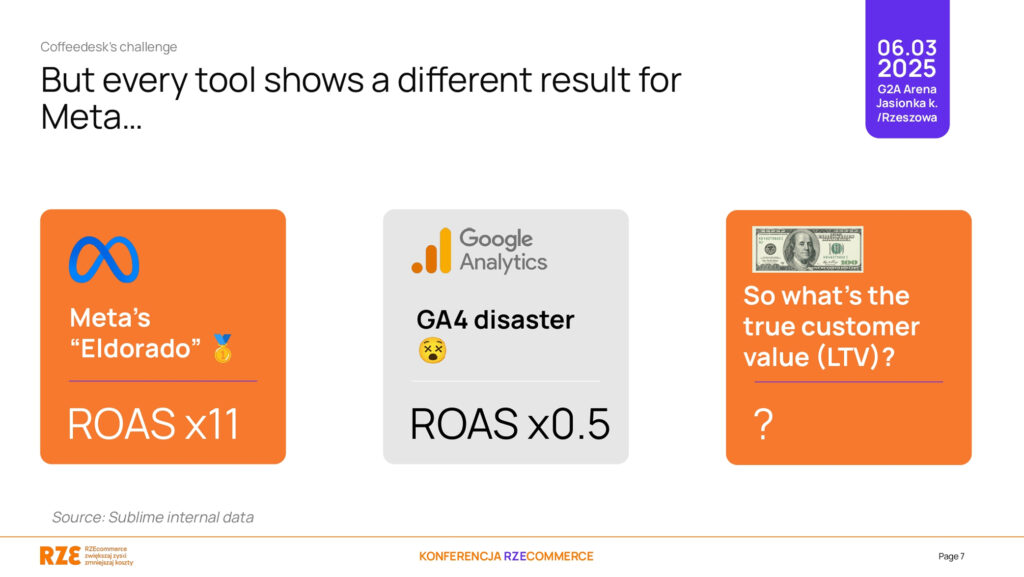
After launching campaigns on Meta, the team quickly encountered a serious measurement challenge. Meta’s ad panel reported a return on ad spend (ROAS) of 11, suggesting exceptional performance. However, Google Analytics 4 (GA4) showed a ROAS of only 0.5 for the same campaigns. This level of discrepancy made it impossible to confidently allocate a budget.
Why standard tools fall short
The discrepancies stem from how each system tracks and attributes conversions.
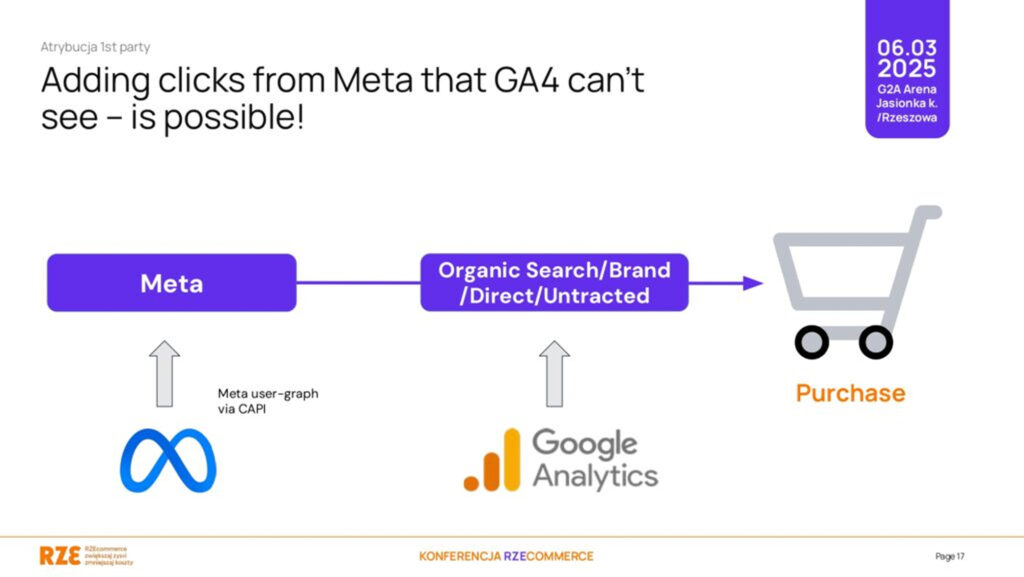
Meta uses its own user graph to link events across devices and sessions. For example, if a user clicks an ad on Instagram and later makes a purchase on a desktop browser, Meta can still attribute that conversion to the ad.
Additional challenges:
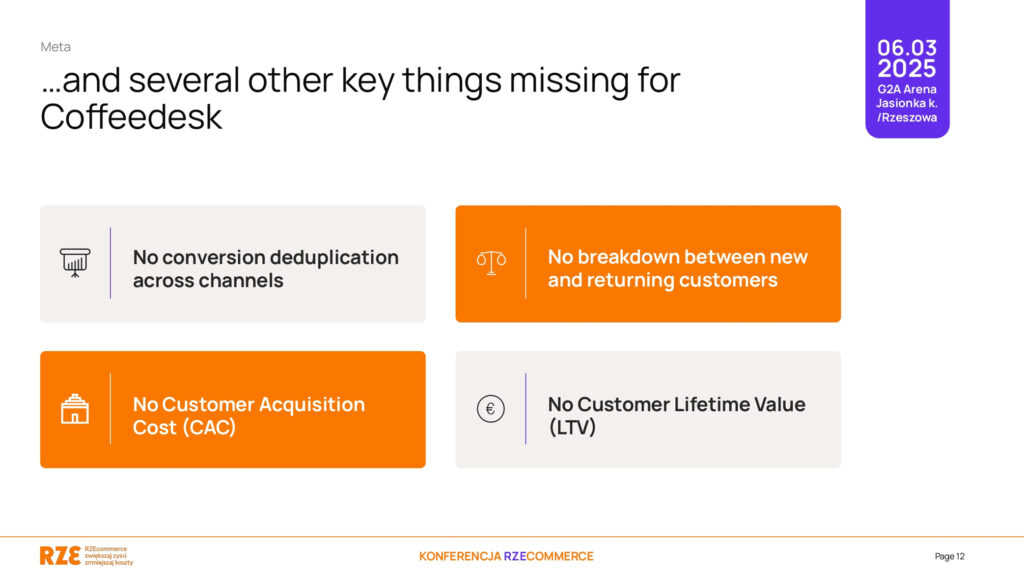
- Meta often over-attributes conversions by ignoring the role of other channels in the customer journey
- Neither GA4 nor Meta can accurately distinguish new vs. returning customers, making acquisition analysis difficult
- LTV and CAC metrics are either missing or highly unreliable without advanced data integration
The solution: implementing First-Party Attribution
At Sublime, we set out to solve this challenge – the answer was a First-Party Attribution Model that enabled accurate performance tracking across channels, better customer segmentation and clearer insight into true campaign impact.
First-Party Attribution Model integrates data from multiple sources and enables a unified view of the customer journey. Specifically, the project leveraged:
- Accessing Meta user-graph to identify ad clicks and touchpoints not visible in GA4 via Meta’s Conversion API
- Data reconciliation methods to stitch together user journeys across devices and platforms.
The impact of First-Party Attribution
By integrating Meta user-graph and deploying First-Party Attribution, Coffeedesk was able to uncover the true performance of their Meta campaigns.
GA4 underreports, Meta overreports
First-party attribution revealed a more balanced view, showing that GA4 was missing significant interactions, while Meta significantly overestimated impact – especially in top-of-funnel (prospecting) campaigns.
Customers from Meta campaigns proved to be valuable
Although GA4 data didn’t fully reflect it, the analysis showed that users acquired through Meta had a similar lifetime value to those coming from Google. This confirmed that investing in Meta ads can attract high-quality customers.
Meta campaigns were driving returning – not new customers
The campaigns were originally designed to attract new users, but the majority of conversions turned out to be from returning customers. This insight helped adjust the campaign structure to better reach and convert new customers.
Summary
Coffeedesk faced a common challenge for a mature e-commerce brand: how to continue scaling profitably when existing acquisition channels become less effective.
After launching paid campaigns on Meta, the Coffeedesk marketing team noticed a significant mismatch between the results reported in the Meta panel and those seen in GA4.
To better understand what was really happening, we introduced a First-Party Attribution Model using Meta user-graph. This provided a more complete view of customer journeys and helped clarify the actual impact of Meta campaigns.
Key takeaways from the analysis:
- Meta’s performance was underreported in GA4 and overreported in Meta’s panel
- Customers from Meta campaigns had comparable long-term value to those from Google
- Many Meta conversions came from returning customers, prompting adjustments in campaign strategy
With more accurate data, Coffeedesk can now make better decisions, allocate budgets more effectively and focus campaigns on acquiring new customers. This project shows how First-Party Attribution can support smarter growth and more efficient marketing.