Scaling customer acquisition based on revenue alone can be dangerously misleading. Traditional LTV (Lifetime Value) calculations ignore the operational costs that quietly eat into profit, like discounts, returns and shipping subsidies.

Sublime solves this by calculating LTV at the contribution margin level, giving you a profit-based view of customer value that reflects how your business really works. You’re not just measuring how much customers spend, but how much they leave after real costs are taken into account.
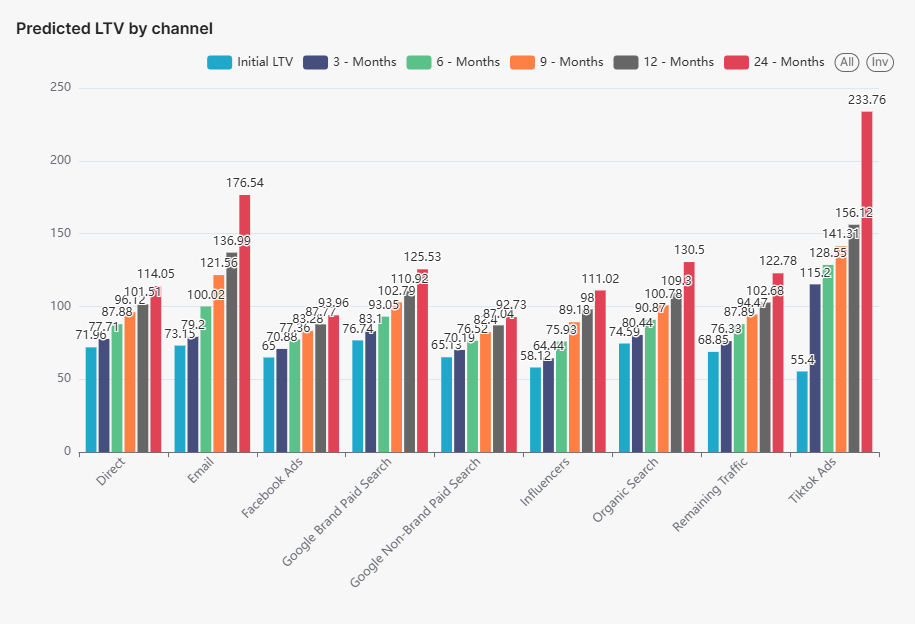
With this level of accuracy, you can stop optimizing for inflated revenue metrics and start focusing on segments that truly drive margin. It becomes immediately clear which campaigns acquire high-value, high-retention customers and which ones are simply producing top-line noise.
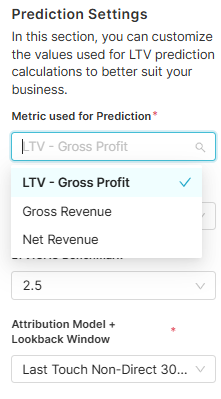
This feature is especially powerful when used across customer segments: comparing profitability by acquisition channel, product category or discount level reveals patterns that would otherwise remain hidden.